Back to Home to display all posts.
Showing posts with label Career. Show all posts

22/02/2025

How Open Source Helped Me Step Up My DevOps Career - Presentation

2 days ago (20.02.2025), it was a pleasure to participate in the Open Source Summit 2025 in KSA.

My session was about participating in Open-source and how it helps to be a better DevOps engineer. In fact, the best DevOps engineers I have encountered possess T-shaped skills that require diving into many areas, even outside of the daily work topics.

How Open Source Helped Me Step Up My DevOps Career

It was nice to reflect on all those years of professional work and open-source contributions 🤩

Continue Reading »

11/01/2025

How to start your DevOps career in 2025 - Podcast

I had a nice podcast with Ahmed Elfakharany part of his Tech Podcast in Arabic about how to start the DevOps career and how to exell in it. The podcast was mainly about the Dynamic DevOps Roadmap.

Watch the full session on YouTube: How to start your DevOps career (Arabic)

Enjoy :-)

Continue Reading »

31/12/2024

2024 Highlights

Finally, 2024 is over! Another crazy year but I like it! 🤩 This year was a bit chill compared to previous ones, but also I did many new things.

Top 5 highlights in 2024

1. Career

In 2022, I formed the Distribution team at Camunda, which is responsible for building and deploying the Camunda Platform 8 Self-Managed, which is an umbrella Helm chart with 10+ systems. In 2023, the main mission was to increase the team size to 4. In 2024, the onboarding was done for all members, and the team became more autonomous and worked at full capacity. I like the process of building and leading the team and am excited for the next steps in 2025. 🤩

2. Dynamic DevOps Roadmap

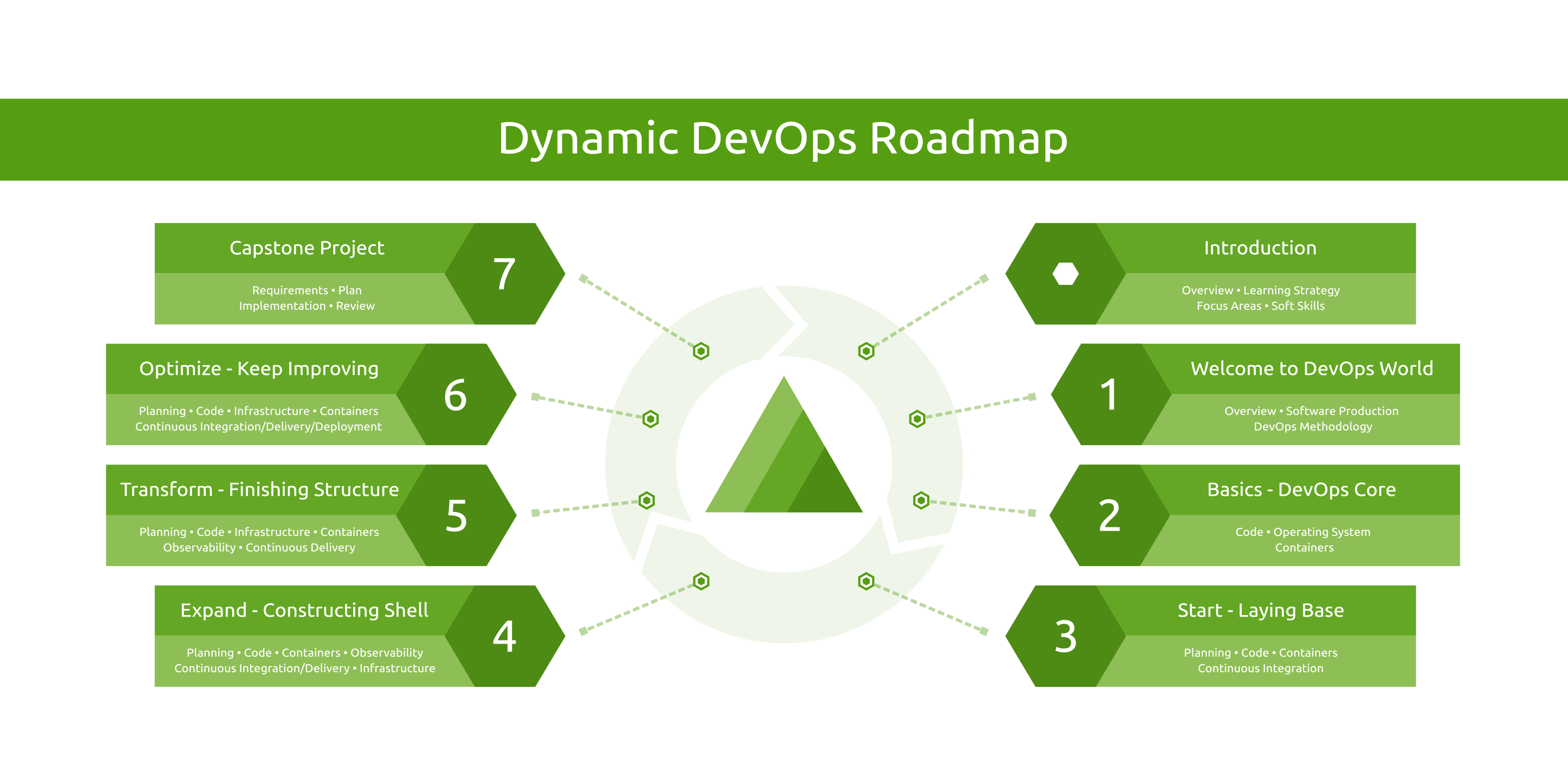
Dynamic DevOps Roadmap

In 2023, I wrote why the DevOps linear roadmaps are broken by default and then sow the seed of the Dynamic DevOps Roadmap to become a DevOps Engineer.

In 2024, I finished 100% of the roadmap and launched the roadmap website, making reading and following progress much easier. I'm pretty happy that many people like the approach of that roadmap instead of other roadmaps that list tons of DevOps tools! (which doesn't really work!). Here are some other highlights:

  • The roadmap repo got more than 1.6k stars on GitHub.
  • Added around 250 quiz questions (embedded in each module).
  • Added around 200 general interview questions.
  • Added interview best practices, which are the same as important as technical skills.
Experience-Driven DevOps: Beyond Tools, Where Concepts Meet Real-World Challenges

A FREE pragmatic DevOps roadmap to kickstart your DevOps career in the Cloud Native era following the Agile MVP style! A DevOps Engineer or Software Engineer, this roadmap is all that you need to start, grow, and expand!

3. Public Speaking

This year, I conducted some nice sessions (in Arabic) with awesome people.

As usual, JobStack_ continues to set the bar higher each year! It is an unmissable event for tech enthusiasts. I really enjoyed participating as both a speaker and a listener. 🤩

In November, I had 2 sessions, the kick-off and another specialized in DevOps.

Also, in December, I participated in a live podcast with Ahmed Elemam covering ⭐ How to start with the Dynamic DevOps Roadmap.

4. Activities

Besides these highlights, I had some nice stuff during the year. For example:

  • Updated my main website aabouzaid.com, listed my projects, blog posts, publications, tech talks, and more.
  • Traveled to 3 countries, Oman, Saudi Arabia, and Dominican Republic to attend tech and work-related events. I also had the chance to meet a lot of friends in those travels. Saudi Arabia wasn't my first time there, but the last time was too long ago, happy to be back again. 🤩
  • After 5 years of OnePlus 6, I got a new phone. First, I tried for a couple of months Samsung Galaxy S23 Ultra, a great device but super heavy! So I swtiched to Samsung Galaxy S24, which is high-quality and perfect in size.
  • Since 2020, I've been using the ergonomic mouse (standard vertical) and keyboard (Microsoft Sculpt) and totally like them. Recently, I changed the mouse to Logitech MX Vertical. It's pretty good for me; my only concern is that the clicks are a bit noisy!
  • Lost some weight, which is great 😄

And since we are on this topic, here are the top 5 visited blog posts in 2024!

Top 5 posts in 2024

  1. 2 ways to route Ingress traffic across namespaces - Kubernetes
  2. How to create Makefile targets with dynamic parameters and autocompletion - Make
  3. Validate, format, lint, secure, and test Terraform IaC - CI/CD
  4. Your DevOps learning roadmap is broken! - Career
  5. 3 ways to customize off-the-shelf Helm charts with Kustomize - Kubernetes

Almost the same as last year, 2023, DevOps, Kubernetes, and Kustomize posts are still in the top.

What's next?

As usual, I don't plan the whole year in advance, I just put some high-level directions then work on them as I go in Agile iterative style (yes, I use Agile for personal goals too).

What I know, I will focuse on growing the Dynamic DevOps Roadmap community and work on the Career Growth and Advanced Topics section.

Previous Years


Enjoy, and looking forward to 2024! 🤩

Continue Reading »

12/12/2024

How to be a good DevOps Engineer - Podcast

Two days ago, I had a nice podcast with Ahmed Elemam part of his Tech Podcast in Arabic about how to be a good DevOps Engineer and how to exell in that domain. The podcast was mainly about the Dynamic DevOps Roadmap.

Watch the full session on YouTube: How to be a good DevOps Engineer (Arabic)

Enjoy :-)

Continue Reading »

12/12/2023

Become a DevOps Engineer with the Dynamic DevOps Roadmap - Career

Dynamic DevOps Roadmap

A couple of months ago, I discussed why all linear DevOps learning roadmaps are broken by default (like roadmap.sh/devops)! In that post, I've discussed the issue, where it comes from, and the solution I tried for over 5 years!

The solution is simply switching to an MVP-style learning roadmap where you learn in iterations and touch multiple parts simultaneously (not necessarily equally). Each iteration should focus on a primary topic while exploring related side topics. So after a month, you already know about each topic in the roadmap, and after the 2nd month, you have the basics, and after the 3rd month, you have a good base, and so on.

Based on my mentorship experience in the last 5 years, I've concluded that any "tool-based" approach to deal with DevOps will fail miserably. The Cloud-Native landscape is getting bigger and bigger every day, and there is no way to deal with it that way.

For that reason, I've reviewed all docs from the previous mentorship docs I held in the past (I worked with people starting their first job, career shift, or moving to another work style or company) and built the ultimate missing solution!

⭐ Check out the Dynamic Roadmap content ⭐

This roadmap is polymorphic, which means it's designed to work in different modes. It depends on how fast you want to go.

  1. Self-Learning Course: In this mode, you are not expected to have DevOps experience, and you want to go from zero to hero, transforming your knowledge to land your first job as a DevOps Engineer.
  2. Hands-on Project: In this mode, you have some experience with DevOps (usually between 1-2 years of work experience), but you want to step up your skills with real hands-on industry-grad projects to learn DevOps in a pragmatic manner.
  3. Mentorship Program: In this mode, the previous two modes are covered (that means it could be only for the project or the whole roadmap) but with support from a mentor! The project will provide you with a DevOps expert who will guide you in following up on your progress and personalizing your learning plan.

The whole idea is about the Learning by Doing method (aka Problem-based Learning), which is done in iterative phases where you learn as you go and cover the whole DevOps cycle like Code, Containers, Testing, Continuous Integration, Continuous Delivery, Observability, and Infrastructure.

The project is a work in progress; more details are in the status section.

I hope that the project helps more people start their DevOps engineering careers! The market is thirsty for it already!

⭐ Check out the Dynamic Roadmap content ⭐

Happy DevOps-ing :-)

Continue Reading »

06/06/2023

Your DevOps learning roadmap is broken! - Career

...
⚠️ Update ⚠️
If you are looking for the solution for this dilemma, then check this out: How to become a DevOps Engineer in 2024 with the Dynamic DevOps Roadmap.
...

Can you read it? Probably not, it's already broken!

As of 2023, the DevOps Engineer role remains one of the top 10 most in-demand jobs across all industries (not just the tech field!) And that was the case for the last 5 years at least and is expected to continue for the foreseeable future.

While DevOps is a hot topic all the time, it's in particular hard to start DevOps engineer as your first job. Many engineers believe that it's not possible at all to begin as a DevOps professional without first working as a developer or in operations (I totally disagree with that!).

Almost every day, I see people struggling on their way to start as fresh/junior DevOps engineers. They usually follow some roadmap (typically roadmap.sh/devops). But still, they cannot land their first job, and sadly, many of them eventually give up!

This blog post explains why most of roadmaps don't work for DevOps roles and won't help you start your first job as a DevOps engineer. Also, the post discusses the best way to start in a DevOps role without prior work experience. While it might not work for everyone, I can say that it has been successful with all the people I have mentored in the last couple of years.


ToC

TL;DR

In 2023 starting a DevOps engineer role is challenging because the DevOps model has various implementations and patterns. It's even more complicated (but still possible) if that's your first job without previous software industry experience. Yet, many learning roadmaps like roadmap.sh/devops still follow a linear path (i.e., learn some topic to the end, then move to another, and so on) which doesn't work well with the DevOps role because a skilled DevOps engineer is a T-Shaped skilled. Adopting a dynamic MVP learning roadmap increases your chances of entering the market and starting your first job as a DevOps engineer without previous software hands-on experience.


DevOps Topologies

First, let's start with the DevOps model itself. Being a high-level methodology that can be implemented in various ways makes it super challenging. Hence, the DevOps engineer role has no unified definition or standard requirements.

I will not delve into the cliché DevOps is not a role, it is a culture (because in reality, it doesn't work like that! DevOps is not just a culture, and it is also a role), but here I want to emphasize that not all DevOps engineers are the same!

Here I want to mention "DevOps Topologies" which covers different team structures that implement DevOps. It shows many bad and good DevOps patterns.

Given that no one-size-fits-all team topology works for every organization, it's wrong to say it's not possible to start your career as a DevOps engineer. But there are situations where it's extremely challenging to do so, such as being the sole DevOps engineer in a team or even in a company.

So, what can you do to increase your chances of landing your first job as a DevOps engineer? You should have T-shaped skills and leave no stone unturned in your learning journey!

T-Shaped Skills

The "T-Shaped skills" helps DevOps engineers to efficivtly handle various challanges.

The T-shaped skills refer to combining broad and deep skills in a specific field. The horizontal bar of the "T" represents a broad range of general knowledge and skills across different disciplines or areas, and the vertical stem of the "T" represents deep expertise in a specific area. It's simply a mix between being a specialist and generalist at the same time!

The T-shaped skills will help you to work in companies with different DevOps patterns. You can easily transition between different areas in the DevOps spectrum. Not only that but also it will help you to handle new challenges effectively. In fact, the best DevOps engineers I have come across possessed T-shaped skills.

Does it mean there's no I-shaped DevOps engineer who specializes in certain areas and no little knowledge in other areas? I would say it's possible, but it may limit the available opportunities and companies you can work with.

Actually, as you progress in your career, it's better to develop more specialization (i.e., more vertical stems), and after a couple of years in the industry, your next step should be Pi-Shaped skills (search also for M-Shaped and Comb-Shaped skills, but it's a topic for another post).

To summarize this section, you should aim to gain exposure to various areas of DevOps practices and technologies without delving too deep into each one, yet, you need to dive in-depth into some of them (according to the market or organizations your target). And due to that, your roadmap shouldn't be linear but follow the MVP-style approach!

MVP Learning Roadmap

You probably heard before about the "Minimum Viable Product" or MVP, a basic version of a product with enough features to satisfy early users and gather feedback for further development, which's commonly associated with Agile methodologies. Interestingly, this approach can also be applied to learning roadmaps too!

Over the years, I saw people want to start their career as DevOps but completely lost! That's probably because they try to progress in a linear fashion. Typically they will follow some roadmap like roadmap.sh/devops and start learning the topics one by one top down. I.e., they spend a couple of weeks with Linux, then a month learning programming language, then some time with the containers, and more time with Kubernetes. And several months passed, and they found themselves stuck in the middle of the roadmap but still unable to get any job because many topics were untouched!

The truth is that the linear vertical learning path DOES NOT WORK in the DevOps field! You need to follow an MVP-style learning roadmap where you learn in iterations and touch multiple parts at the same time (not necessarily equally). Each iteration should focus on a primary topic while exploring related side topics. So after a month, you already know about each topic in the roadmap, and after the 2nd month, you have the basics, and after the 3rd month, you have a good base, and so on.

By adopting an MVP-style learning roadmap, you can ensure that you cover various aspects of DevOps while continuously building upon your knowledge. This approach allows for a more well-rounded understanding and a better chance of landing your first job as a DevOps engineer.

3 different high-level roadmaps models with different approaches to learning, the first two from the left follow the MVP-style, and the last one is linear.

  • The model on the left iterates horizontally in equal chunks over each area (good). It's simple and straightforward, each area (e.g., OS and code, containers and cloud, etc) has a fixed weight based on importance in the daily work. You don't need to think a lot about the next step, from the left to the right, you learn about each area and reach basic knowledge in all of them.

  • The model in the center iterates horizontally in dynamic chunks over each area (better). It's the same as the previous one but a bit more advanced, where it needs hands-on knowledge to decide the right weight for each area (based on many factors like targeted market or learner skills or background). This approach is more efficient; however, it requires guidance from an experienced DevOps engineer (e.g., a mentor or career coach) to define the weights correctly. It's even more critical when you have some sort of constraints like time or so (they are usually there in career shifts).

  • The model on the right iterates vertically over each area (bad). Don't do that! It has several drawbacks. For example, it delays your market fit, where in most cases, you cannot work as a DevOps engineer until you have completed all areas. Additionally, there is no space to review your learning approaches or holistic feedback in general. Finally, it's missing the connection between different areas, at the end of the day at work, you don't use a single skill at a time. I actually saw many disappointed people in the middle of the roadmap because they still didn't get the full picture.

So to ensure a more effective learning journey, it's recommended to adopt an MVP-style learning roadmap that allows for iterative learning across multiple areas while also considering the relevance and importance of each area in real-world DevOps work.

The Solution!

⭐ Check out the Dynamic Roadmap content ⭐

A dynamic MVP-style learning roadmap is one of the best ways to start as a DevOps engineer.

Let's put everything together. The Based on my experience mentoring people in different stages (starting their first job, career shift, moving to another work style or company), I have found that the approach of using a dynamic MVP-style roadmap with hands-on projects designed by an experienced DevOps engineer has been highly successful. That means each project will cover all DevOps areas used in the job. It's also essential to understand the targeted market and organizations because, with different DevOps topologies, the DevOps engineer role requirements vary.

In conclusion, to start working DevOps engineer, you don't need to know "everything" about the software development life cycle (SDLC), nor start as Dev or Ops and then switch to DevOps. In many DevOps topologies, you can secure your first job as a DevOps engineer if you invest enough time in learning (not only the technical aspects) and follow an MVP-style roadmap. Also, undoubtedly having a senior DevOps on both ends (during the learning and in the company where you apply) will make your start much easier.

Continue Reading »

22/06/2022

Moderating DevOps circle at JobStack 2022

Last Satruday (18.06.2022), I had a great chance to moderate and participate the DevOps circle in JobStack 2022 by Talents Arena. JobStack is the biggest virtual tech job fair in the region (MENA) and this was the 4rd edition.

With Hussein El-Sayed (Software engineer III at AWS) and Mohamed Radwan (Sr. Cloud Architect at T-Systems) ... we answered many different questions about DevOps. The circle or the AMA session was heavily based on a previous collaborative session between us in 2022 (DevOps! What, Why, and How? - Arabic)

The whole event was great and had a lot of fruitful sessions and discussions.

Continue Reading »

31/08/2021

04/04/2021

11/11/2020

20/09/2020

11/11/2019

Let your team evolve! - Career

A painting titled "Why so many people don't evolve appropriately in their career!" (mostly juniors and mids, but sometimes also seniors) ... Here is why!


My edit based on the original comic by BizarroComics.

I've been working in the tech industry for several years now, and what helped me the most that seniors gave me a chance to move forward. (of course, you still need to put a lot of effort from your side).

The best seniors I've worked with were not only strong in pure technical but also they were really good in tech-related stuff ... and mainly how to make people around them get better! (especially juniors)

In my career I've recognized a pattern, the entire people's career is affected heavily by their first job! And people acts later affected by that. If their first job was great and worked with smart, open, humble, and supportive people so their career later will be much much better, and vice versa.

So dear senior, seniority is not just technical! It's also about working with people and make sure they are going forward!

Here are some takeaways based on what I saw in the last couple of years.

1. Junior development could be started from day one

I saw many seniors were treating juniors like "babies"! They always think that they, the juniors, still young and not experienced to do many things. And they need to wait a bit more before they involve in proper tasks.

People's development could be started from day one. And as a senior, you don't need to wait anytime to support juniors around you. And juniors need to learn "how to think" to solve problems instead of just looking for a solution for a problem. It's kinda like "MVP pyramid", where you have small a chunk from many skills instead big chunk from a single skill.

2. You don't need to be a senior to start developing people

There is no correlation between your experience and developing people. You don't need to wait till you are a senior to support the people around you. One junior or mid in a group of juniors could enhance the whole group significantly.

That could be done by asking questions, support other people, or making a competitive state in the group. You could be this person or you find someone else to pair with them and go forward.

3. If you didn't have seniors to support you, find them!

We all know that life is not perfect. And it's hard to find that great senior who could help and support you in your career. Many seniors who are strong technically could be not that informative or interested/good in people's development at all.

Whatever the reason, that great senior that you are looking for could be not in your current company! So you need to find them. You need to find a mentor even outside your current company to guide you in your career.

Again, life is not that perfect! In reality, it's hard to find that mentor and if you found them it's harder to keep in touch with them for a long time. So you mostly will need to find more than one person and learn the best from each one.

4. Don't wait for someone to make your personal development plan

Last but not least, a word for juniors ... most of the time you will need help from seniors to make your personal development plan; however you don't need to wait and you can make your own. You just need to put more effort to make one by asking more seniors and collecting all data could help you to build your plan.

...

Those some points I've been realized during my career and I didn't find many people focus on them, so I just like to emphasize them.

Hope you a happy career! :-)

Continue Reading »
Powered by Blogger.

Hello, my name is Ahmed AbouZaid, I'm a passionate Tech Lead DevOps Engineer. 👋

I specialize in Cloud-Native and Kubernetes. I'm also a Free/Open source geek and book author. My favorite topics are DevOps transformation, DevSecOps, automation, data, and metrics.

More about me ➡️

Contact Me

Name

Email *

Message *

Start Your DevOps Engineer Journey!

Start Your DevOps Engineer Journey!
Start your DevOps career for free the Agile way with the Dynamic DevOps Roadmap ⭐

My Latest Peer-reviewed Research Paper

My Latest Peer-reviewed Research Paper
Building a Modern Data Platform Based on the Data Lakehouse Architecture and Cloud-Native Ecosystem

Latest Post

10 Helm Chart Development Best Practices - Kubernetes

About 10 years ago, I used SaltStack extensively and wrote my top 10 best practices for SaltStack formulas . Today, I do the ...

Popular Posts

Blog Archive