Back to Home to display all posts.
Showing posts with label Golang. Show all posts

31/12/2023

2023 Highlights


Image generated with Craiyon.

Finally, 2023 is over! What a year! One more crazy year, but it was the culmination of many actions I've started previously.

Starting with the fun facts ... this is the post no. 100!

After 9 years of tech blogging in English (I had another 10 in Arabic before that). It should be 108 posts since the plan was to post 1 per month, but I missed some, still not bad!

Top 5 highlights in 2023

1. Career

Image by vectorjuice on Freepik

In 2022, I formed the Distribution team at Camunda which is responsible for building and deploying the Camunda Platform 8 Self-Managed which is an umbrella Helm chart with 10+ systems. In 2023, the biggest challenge was increasing the team headcount to 4 and building the workflow to handle that!

2. Academia

I've always been into data! So in 2020, I started a part-time master's in Data Engineering at Edinburgh Napier University. After almost 3 years, I was awarded a Master of Science with Distinction in Data Engineering ๐ŸŽ‰. In June, I got the result after I successfully defended my dissertation titled Modern Data Platform with DataOps, Kubernetes, and Cloud-Native Ecosystem. Then in October, I traveled to Scotland to attend the graduation ceremony. All I can say today is that it was a great experience by all means! (and that's actually why I had some unusual gaps in blog posts in 2023 because I was working on the master's thesis).

3. Mentorship

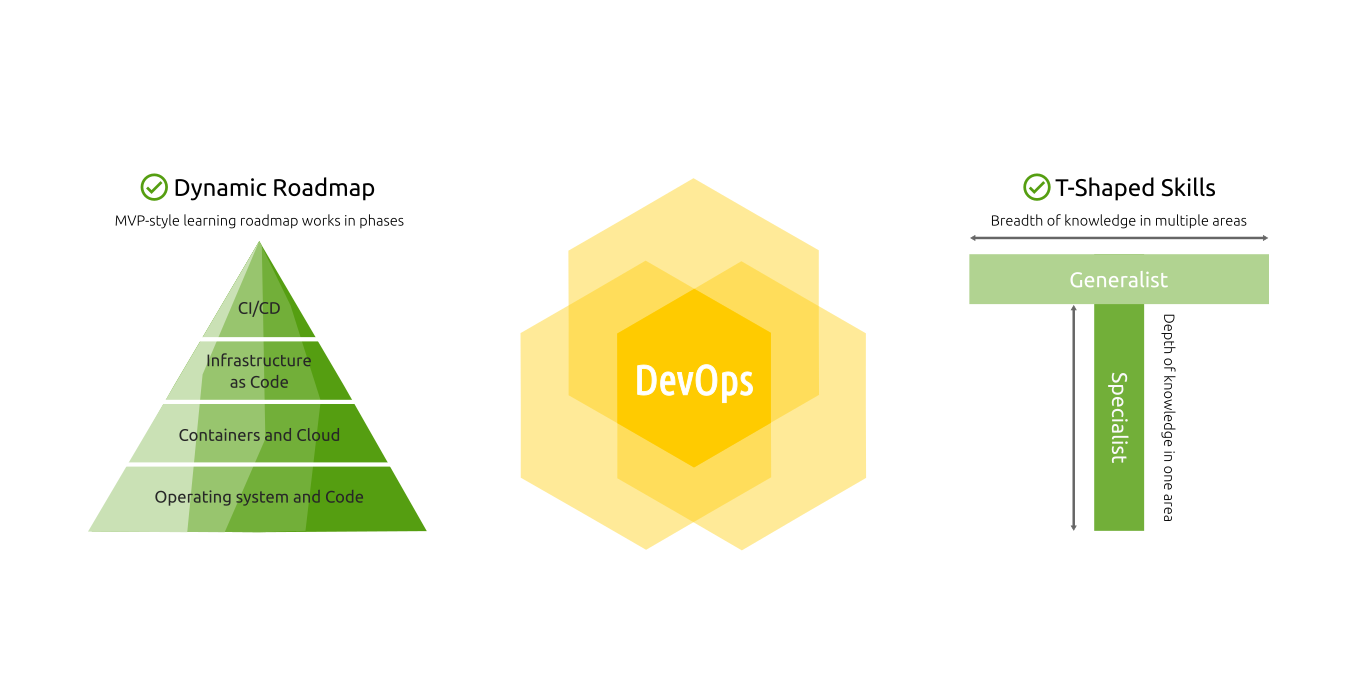
Dynamic DevOps Roadmap

In the last 5 years, I mentored many people in different career stages (starting their first job, career shift, moving to another work style or company). Almost every day, I see people struggling on their way to the DevOps field. I already wrote why the DevOps linear roadmaps are broken by default! So I decided to fix that and launched a Dynamic DevOps Roadmap to become a DevOps Engineer which under the DevOps Hive identity! The nice thing that I saw many people already like the idea and want to do it that way!

โ„น️ Check out the Dynamic Roadmap content โ„น️

4. Public Speaking

Jobstack is one of my favorite tech events all the time! And as usual, this year was awesome! As a speaker, I had 2 sessions, and as an attendee, I enjoyed many sessions on different topics.

5. Activities

Besides these highlights, I had some nice stuff during the year. For example:

And since we are on this topic, here are the top 5 visited blog posts in 2023!

Top 5 posts in 2023

  1. 2 ways to route Ingress traffic across namespaces - Kubernetes
  2. Validate, format, lint, secure, and test Terraform IaC - CI/CD
  3. Your DevOps learning roadmap is broken! - Career
  4. Delete a manifest from Kustomize base - Kubernetes
  5. 3 ways to customize off-the-shelf Helm charts with Kustomize - Kubernetes

The same as last year, 2022, Kustomize posts are still in the top; that's because there is not much content about it even though it's built-in kubectl now! (since v1.14). That's why I created a Kustomize Awesome list, which is a curated and collaborative list of awesome Kustomize resources.

But this year, 2023, for the first time, a blog post posted in the same year appears in the top 5 posts! Which is discussing how the linear DevOps learning roadmap is broken by default! That's why I had a follow-up post showing the solution that suggests a better way to Become a DevOps Engineer with the Dynamic DevOps Roadmap. ⭐

What's next?

As usual, I don't plan the whole year in advance, I just put some high-level directions then work on them as I go in Agile iterative style (yes, I use Agile for personal goals too).

What I know already is that I need to reward myself and take a good break after the master ๐Ÿ˜

Also, I want to put more effort to grow the DevOps Hive community to help more people to land their first DevOps Engineer role!


Enjoy, and looking forward to 2024!

Continue Reading »

09/09/2023

๐Ÿ”€Merger๐Ÿ”€, a schemaless strategic merge plugin - Kustomize

Kustomize is a great tool. I've been using Kustomize for almost 4 years and am happy with it. However, it's known for its strict merging methods, where it needs to have an OpenAPI schema to merge files properly.

There were many use cases where I needed a more flexible way to merge resources (away from Kustomize's strict merging). So, I've developed a new Kustomize generator plugin (Containerized KRM and Exec KRM) that extends Kustomize's merge strategies (schemaless StrategicMerge).

I wanted to:

  • Generate multiple resources from a single resource without the need to multi-import (you can patch multiple resources with a single patch but not the other way around)
  • An easy way to merge CustomResources without the need to provide the OpenAPI schema for it (that's actually a lot of work)
  • An easy way to merge non-k8s resources and put them in a ConfigMap.
  • A way to split long files into smaller ones.

...

Say Hi to ๐Ÿ”€Merger๐Ÿ”€

Merger is a generator provides schemaless merges with different strategies (StrategicMerge) like replace, append, and combine.

Here is an example:

apiVersion: generators.kustomize.aabouzaid.com/v1alpha1
kind: Merger
metadata:
  name: merge
    annotations:
      config.kubernetes.io/function: |
        container:
          image: ghcr.io/aabouzaid/kustomize-generator-merger
          mounts:
          - type: bind
            src: ./
            dst: /mnt
spec:
  resources:
  - name: example
    input:
      # Available options: overlay,patch.
      # - Overlay: Produce multiple outputs by merging each source with the destination.
      # - Patch: Produce a single output by merging all sources together then with the destination.
      method: overlay
      files:
        # The same as in the KRM container above, omit it if Exec KRM is used.
        root: /mnt
        sources:
        - src01.yaml
        - src02.yaml
        destination: dst.yaml
    merge:
      # Available options: replace,append,combine.
      # - Replace: All keys in source will merge and replace what's in the destination.
      # - Append: Maps from source merged with destination, but the lists will be appended from source to destination.
      # - Combine: Maps from source merged with destination, but the lists will be combined together.
      strategy: combine
    output:
      # Available options: raw.
      # In the next releases also ConfigMap and Secret will be supported.
      format: raw

For more details, check the common use cases section.

...

Some takeaways I learned while developing this project:

  • KubeBuilder markers could be used with the client side to auto-generate the OpenAPI YAML schema from the code.
  • Golang compression methods (like UPX and LZMA) can reduce the binary size up to 80% compared to the standard build method.
  • Cosign keyless artifacts sign is pretty easy to add to the CI pipeline (no need to manage any extra keys).
  • OpenSSF Scorecard offers a great integration assessing the security health metrics of open-source projects.

Enjoy :-)

Continue Reading »

05/05/2023

KubeconformValidator, my first Kustomize validator plugin - Golang

TL;DR

In the past, Kustomize suggested using transformers to validate resources, but later, it introduced validators, which are like transformers but read-only.

Say Hi to KubeconformValidator, a plugin built around Kubeconform to validate manifests schema within Kustonize ๐Ÿš€

Details

  • Kubeval is not maintained anymore, and their repo suggests using Kubeconform as a replacement.
  • The KRM model is used in the plugin, so no more Kustomize legacy plugins.
  • During the weekend, I did it in 5 short iterations (in hours) to discover different options and structures.
  • In the past, I used kpt-functions-sdk/fn to work with KRM, but I decided to try Kustomize's kyaml/fn/framework, and it's great ๐Ÿ˜
  • The kyaml/fn/framework saved a lot of work with KRM and let met to just focus on the plugin logic. For example, I don't need to deal with OpenAPI Schema validation, it does it perfectly.

Example

apiVersion: validators.kustomize.aabouzaid.com/v1alpha1
kind: KubeconformValidator
metadata:
  name: validate
  annotations:
    config.kubernetes.io/function: |
      # Exec KRM functions.
      exec:
       path: ../dist/kubeconformvalidator

      # # Containerized KRM functions.
      # container:
      #   image: aabouzaid/kubeconformvalidator
      #   network: true
spec:
  # Configure Kubeconform.
  config:
    output: json
    skip:
    - AlertmanagerConfig
  # Also, direct Kubeconform args could be used
  # but "spec.args" has lower priority over "spec.config".
  # https://github.com/yannh/kubeconform#Usage
  # args:
  # - -output
  # - json
  # - -skip
  # - AlertmanagerConfig

That's it! Enjoy, and don't forget to take a look at awesome Kustomize list! :-)

Continue Reading »

31/12/2022

2022 Highlights


Just a random image generated with AI!

Finally, 2022 is over! What a crazy year! In many countries, the Covid-19 pandemic is about to come to an end, but a global economic recession is almost at the door!

On a personal level, it wasn't an easy year for sure, but it was good in many different ways.

Top 5 highlights in 2022

  1. Career: Started the Distribution team at Camunda ๐Ÿคฉ️ which is responsible for building and deploying the Camunda Platform 8 Self-Managed (now using an umbrella [Helm chart). Later on, there will be a Kubernetes Operator. That's a great career boost; I just started with many new and exciting challenges. And BTW, my team will begin hiring in 2023!

  2. Coding for Kubernetes: Big refactoring for Bank-Vaults operator which is the biggest open-source contribution to a project I don't own/manage. It polished my Golang skills, and I learned many new things (and had fun where I redesigned the operator logo ๐Ÿ˜‚️).

  3. Security Knowledge-sharing: In 2021, I got my CKS certificate. Then, at the beginning of 2022, I started a security initiative at Camunda to enhance security practices. Then, later on, I conducted a session about Kubernetes Security Best Practices (with some tips for the CKS exam) which was a great case that includes theory, applied practice, and knowledge-sharing!

  4. Advanced CI/CD Knowledge-sharing: I wrote a detailed post about my experience with custom step conditionalRetry, which handles failures on spot/preemptible infrastructure so you could save up to 90% of the costs and have stable builds as well! It's been released as open source, and you can use that in your pipeline!

  5. Activities: Helped more people in their careers, once by moderating the DevOps circle at [JobStack 2022, and also in the voluntary mentorship that I do from time to time.

Besides these highlights, I had some nice stuff during the year. For example:

  • Added more features to kubech (which is a tool to set kubectl context/namespace per shell/terminal )
  • Virtually attended KubeCon Europe 2022, and the content was great!
  • Reached my writing goal this year and wrote 12 blog posts in 2022!

And since we are on this topic, here are the top 5 visited blog posts in 2022!

Top 5 posts in 2022

  1. Delete a manifest from Kustomize base - Kubernetes

  2. 3 ways to customize off-the-shelf Helm charts with Kustomize - Kubernetes

  3. Validate, format, lint, secure, and test Terraform IaC - CI/CD

  4. Now I'm a Certified Kubernetes Application Developer + 10 exam tips

  5. Continuous Delivery and Maturity Model - DevOps

No wonder that Kustomize post is the hights post; that's because there is not much content about it even though it's built-in kubectl now! (since v1.14), I probably need to give it more attention since there is an increase in the demand for it.

For that reason, I just started Awesome Kustomize, which is a curated and collaborative list of awesome Kustomize resources ๐ŸŽ‰️


Enjoy ๐Ÿš€️

Continue Reading »

03/03/2022

Refactoring Bank-Vaults operator for full Vault management support

In Q1 2022, my friend Islam Wazery and I were working on an interesting enhancement for the open-source Vault Kubernetes Operator, Bank-Vaults.

It's one of my biggest open-source contributions recently. In this meta post, I like to share some details about the problem we were trying to solve, goal, available solutions, implementation details, and challenges during working on the new feature.


ToC


1. Intro

Anyone who used Kubernetes knows that the Secret resources are encoded, not encrypted, so you probably need another solution to manage your secrets and sensitive data. HashiCorp Vault is one of the best tools for that purpose.

In case you didn't use Vault before, here is a short intro from its docs:

Vault is an identity-based secrets and encryption management system. A secret is anything that you want to tightly control access to, such as API encryption keys, passwords, or certificates. Vault provides encryption services that are gated by authentication and authorization methods. Using Vault's UI, CLI, or HTTP API, access to secrets and other sensitive data can be securely stored and managed, tightly controlled (restricted), and auditable.

HashiCorp already provides resources to install Vault on Kubernetes as well as a Helm chart for Vault. However, there is no official solution from HashiCorp to manage Vault itself on Kubernetes. And here comes Bank-Vaults, the Vault Swiss Army Knife!

Bank-Vaults by Banzai Cloud is an open-source umbrella project which provides various tools (Operator, Configurer, Vault Env injector, and more) for ease of use and operation of Hashicorp Vault.

The most exciting part here is the Vault Operator by Bank-Vaults. Which allows you to manage Vault on Kubernetes. And based on my research, it's the only operator in the market for Vault, so I started a PoC to use it in production.

2. Problem

After the initial setup, It seemed that the Bank-Vaults operator was mature and production-ready. It had many features like bootstrap, sealing, unsealing, cloud backend, and all the features we need, but it's missing an important feature, it didn't support full Vault management! It handled the creation of Vault's config (like policies, secrets engines, auth methods, etc.), but it didn't handle the removal of the config! And that was confirmed by the issue no. #605 which had been unresolved for more than 2 years! (Aug 2019)

Next, I've checked the operator code, and it turned out that the operator works only with create/update, but it doesn't have any mechanism to work the config removal. No one fixed that because it's a full feature that needs much work (well, that's why it needed more than 2 years to fix).

That means the operator doesn't fully manage Vault! Unfortunately, this is a deal-breaker to use the operator in production. And to fix that, there are several ways to remove the unmanaged config. In the following sections, I dive more into the available mechanisms to handle the config removal, but first, let's set the goal.

3. Goal

I already experienced managing Vault using Terraform but doing that on Kubernetes would be a snowflake where it needs an extra stateful tool! I like to use Terraform for the infrastructure like Kubernetes clusters but not for the apps. Hence, I don't want to go that way.

So the ultimate goal is that the operator should be able to manage Vault completely. It should add and remove Vault config like policies, secrets engines, auth methods, etc. And that should be done using the Kubernetes ecosystem in a cloud-native approach.

4. Available solutions

Based on my previous experience with code, infrastructure as code, and configuration management tools, there are several ways to achieve config removal, and each one of them has pros and cons.

4.1 Purge anything not in the config

The first mechanism is simply the purge approach, where the operator removes anything not in the configuration. This mechanism compares Bank-Vaults config and Vault config and removes the differences.

So this approach is somewhat radical. It doesn't allow any manual changes, and any change outside the configuration will be removed. But the good side is that, well, it doesn't allow any manual changes! So the configuration is the source of truth. However, there is mitigation to allow some manual changes by excluding some of the configs. I will discuss it in the implementation section.

4.2 Compare differences between the old and new config

The second mechanism is the last-diff approach, where the operator compares the old and the new config and removes anything not in the new config. This way is considered "semi-stateful" where you need to have the old config and the new config to compare them. This approach allows manual changes outside the operator, but the operator is only aware of the last changes.

4.3 Manage changes statefully

The third mechanism is the diff approach, where the operator maintains a state of all its operations, and with any new change, it compares the changes with the state (this is the Terraform way). This way is fully-stateful, which allows for tracking the changes done by the operator and allows manual changes outside the operator.

4.4 Handel config individually

Finally, the fourth mechanism is the flag approach, where the operator manages the config according to a config flag. For example, each policy in the operator config could have a field called "state", and its value could be "present" or "absent" (this is the style of config management tools like Ansible). In this solution, it's possible to have managed, and unmanaged config but the biggest downside is that you need to deal with the config on the individual level.

5. Implementation

In the cloud-native era, the first style looks the most suitable approach where full management is assumed. So anything that is not in the config would be removed. And to mitigate that behavior, it's 'possible to exclude some sections like policies, auth methods, etc., so they could have manual changes if needed.

Vault has main 7 configuration sections:

  • Audit
  • Auth
  • Groups
  • GroupAliases
  • Plugins
  • Policies
  • Secrets

Each section already has the "add" mechanism, and it's able to create the config in Vault, and the goal is to add the "remove" mechanism to have full CRUD (Create, read, update and delete). However, the "adding" code wasn't follow Golang style and it needed to be refactored. So for each section, the code is refactored first, then the "removing" code is added.

Let's take policies as an example (which will be the same way for all 7 configs mentioned above); the "removing" part works as the following:

  1. Bank-Vaults operator reads its config file with managed policies.
  2. Then, it calls Vault to get all already configured policies.
  3. Then, it compares what's in the config (the desired state) with Vault (the actual state).
  4. Finally, if there are differences, then the Bank-Vaults operator calls Vault to delete the unmanaged policies.

The final step is creating E2E tests to run in the CI (Github Actions). The tests simply check different cases like removing a config while the purge option is disabled/enabled fully/partially. Now let's take a look at the challenges I had while working on this feature.

6. Challenges

In the following sections, I'd like to share the top challenges while introducing full Vault management in the Bank-Vaults operator.

6.1 Project complexity

Bank-Vaults is not just the operator; it's an umbrella project to work with Vault. It's a mono repo with many shared parts. For example, the operator relies on a CLI tool with the same name.

Hence, the first challenge was to understand the project structure and where exactly to change, and how the changes could affect the rest of the project.

6.2 Refactoring the write path

After a thoughtful dive into the project, it was clear what and where I should change to fully manage Vault by Bank-Vaults (so it can add and remove config in Vault). However, the write path code in the operator (that's responsible for creating and updating managed config) doesn't follow the Golang style. It was more like Python written in Golang. It reminded me of when I wrote Golang for the first time, coming from a Python background.

Leaving the write path code as it is would make the code oddly bad and redundant. So the first step was refactoring the "write path" code, then adding the "remove path" code (which is responsible for removing any unmanaged config). And this was the second challenge to solve before the actual implementation.

6.3 Only generic acceptance tests

Another challenge was that the part I wanted to change didn't have any unit tests, but only generic acceptance tests were available. Which makes things harder to change. I needed to pay extra attention to ensure I didn't break anything while refactoring the existing code and introducing the new feature. That also means I should write some E2E tests to avoid this situation in the future.

6.4 Coordination

As I mentioned before, this feature is a bit big, and it would be implemented by 2 people (my friend Wazery and me). At the same time, it's a new project we didn't work on before, and we didn't work together before. So we needed to make sure that everything was clear and both of us were aligned to deliver this feature in high quality.

7. Result

With the PR no. #1538, and Bank-Vaults v1.15.1 was able to fully or partially purging unmanaged configuration in Vault.

The user has the option to fully or partially purge unmanaged config as shown here:

purgeUnmanagedConfig:

  # This will purge any unmanaged config in Vault.
  enabled: true

  # This will prevent purging unmanaged config for secret engines in Vault.
  exclude:
    secrets: true

To avoid behavior change, and since this feature is destructive, it was safe to make it disabled by default. The user needs to enable it explicitly in Bank-Vaults config. And as usual, it's recommended to test it in a non-production environment first.

Wazery PRs:

My PRs:


That's it! It was a pretty exciting journey for me ๐Ÿคฉ️

Continue Reading »

04/04/2019

06/01/2019

07/07/2018

Powered by Blogger.

Hello, my name is Ahmed AbouZaid, I'm a passionate Tech Lead DevOps Engineer. ๐Ÿ‘‹

I specialize in Cloud-Native and Kubernetes. I'm also a Free/Open source geek and book author. My favorite topics are DevOps transformation, DevSecOps, automation, data, and metrics.

More about me ➡️

Contact Me

Name

Email *

Message *

Start Your DevOps Engineer Journey!

Start Your DevOps Engineer Journey!
Start your DevOps career for free the Agile way with the Dynamic DevOps Roadmap ⭐

My Latest Peer-reviewed Research Paper

My Latest Peer-reviewed Research Paper
Building a Modern Data Platform Based on the Data Lakehouse Architecture and Cloud-Native Ecosystem

Latest Post

10 Helm Chart Development Best Practices - Kubernetes

About 10 years ago, I used SaltStack extensively and wrote my top 10 best practices for SaltStack formulas . Today, I do the ...

Popular Posts

Blog Archive